Roomster® 5M+Downloads
- 3.3
- Rating
- 5.00M
- Installs
- Free
- Price

 Analysis by App-foxy
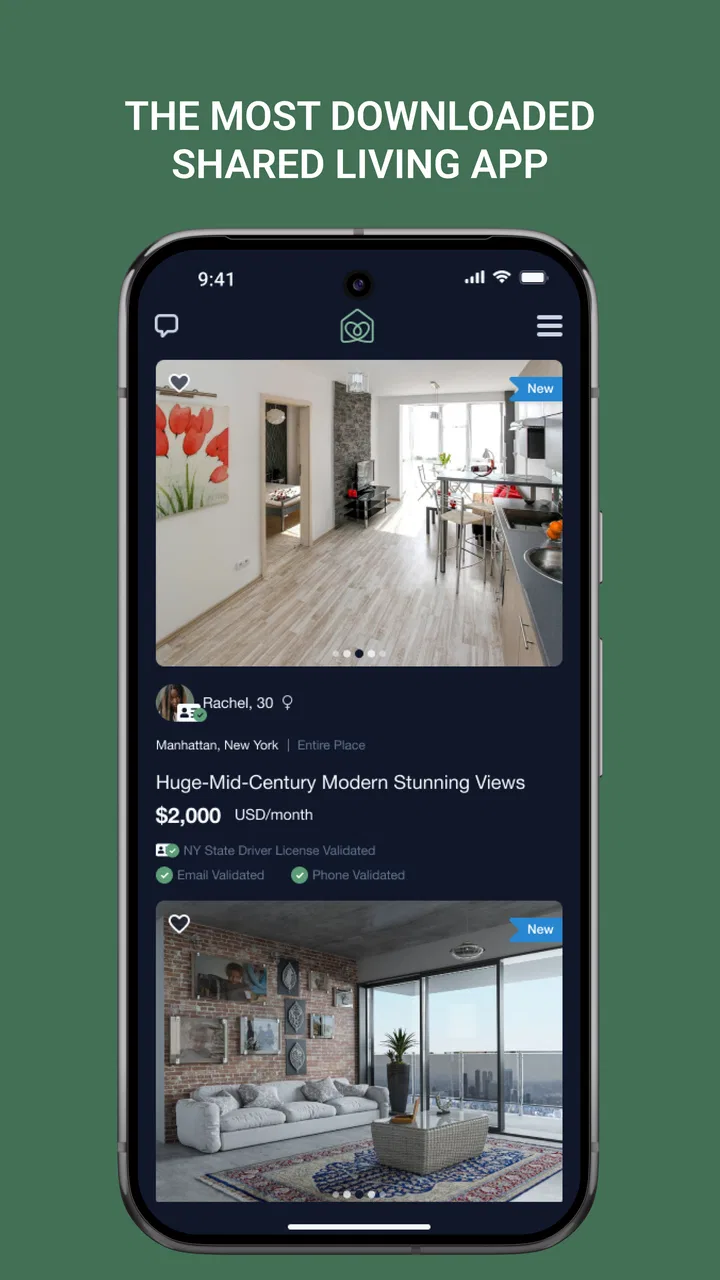
Finding a room is usually easy; finding one that fits your budget, location, schedule, and comfort level is much harder. That is the problem I kept coming back to while using Roomster®, a lifestyle app from Roomster Corp. Its central capability is roommate matching: instead of searching only for empty rooms, I could also look through people seeking roommates and compare those two sides of the rental decision in one place.
That focus makes the app more useful than a simple list of available bedrooms, especially when I was flexible about whether I would move into an existing home or share a new place with someone else. It is free to install and available to Everyone, although some parts of the experience involve in-app purchases ranging from $7.99 to $59.99 per item. I would not treat it as a complete replacement for careful housing research, but I found it valuable as a first step for turning a vague search into a shortlist of possible matches.
Roommate matching is the feature that changes the search
The most important thing about Roomster is that it treats the roommate as part of the housing search rather than as an afterthought. On many ordinary rental platforms, the room is the main object and the person already living there is barely visible. Here, the basic idea is different: I can look for a room, look for people, or think about both options together.
You May Also Like

 Blood Strike: 2.5 Anniversary
Blood Strike’s Loadouts Turn Every Drop Into a Tactical Gamble
A close look at Blood Strike’s custom loadouts: how fast access to signature weapons reshapes its battle royale rhythm, rewards preparation, and narrows the gap between fights.

 Pandora - Music & Podcasts
Pandora’s Music Is Easy to Start, but Harder to Recover
Pandora’s strength is its low-effort path from a seed to a station. Its weak spot is how much confidence it asks you to place in connection, setup, and quiet recovery.

 8 Ball Pool
 Is Built on Rivalries, Rematches, and Routine
A close look at the rivalries, rematches, shared routines, and unanswered safety questions that turn a quick pool match into a persistent mobile community.

 Samsung Music
’s Quiet Strength Is Playing What You Already Own
Its reach comes less from spectacle than from dependable access to a personal library. That simplicity is both the app’s strongest retention engine and its ceiling.

 AccuWeather: Weather Radar
AccuWeather Review: A Quick, Clear Forecast for Everyday Decisions
For everyday plans, the best forecast is the one you can understand quickly. AccuWeather makes rain timing, radar, and local conditions easy to act on, with a few trade-offs.

 Hill Climb Racing
Why Hill Climb Racing Still Turns Crashes Into One More Run
A tiny car, a bumpy hill and one more upgrade: Hill Climb Racing keeps resurfacing because its simple chaos makes every near-miss feel personal.
More From Our News Desk



That distinction matters when a person is moving to a new city, starting a course, changing jobs, or leaving a shared home unexpectedly. Someone may not know the exact neighborhood or property they want yet, but they may know the type of person they can live with. Conversely, someone with an available room may need a compatible housemate more than they need another generic inquiry.
I found this capability most helpful when I stopped treating every result as a final rental offer. A listing is better understood as a conversation starter. It can help me identify possible locations, living arrangements, and people whose situation is similar to mine. The app’s value is therefore not just in displaying rooms; it is in making the matching process more two-sided.
The real strength is the ability to compare housing needs and roommate needs at the same time. That sounds simple, but it changes how I make decisions. Instead of asking only, “Is this room affordable?” I can also ask, “Would this living arrangement make sense for both of us?” That second question is where many shared-home problems begin, and it is also where a focused matching app can save time.
What I would prepare before opening the app
Roomster works better when I already know a few non-negotiables. I would decide my maximum monthly budget, preferred area, approximate move-in timing, and whether I need a private room or would consider another arrangement. I would also write down practical lifestyle details: work-from-home habits, noise tolerance, cleaning expectations, guests, pets, and preferred lease flexibility.
This preparation is not busywork. It makes the matching process more honest. A short profile that says only “looking for a room” gives another person very little to judge. A clearer description helps potential roommates decide quickly whether a conversation is worth having. It also reduces the chance that I will become interested in a room before noticing a basic incompatibility.
I would keep the first version of a profile factual and calm. I do not need to reveal sensitive personal information to explain my routine. A useful introduction can describe schedule, approximate budget, preferred area, and the kind of household I hope to join. The goal is to make compatibility easier to assess without turning the profile into a public diary.
How I used the search without losing perspective
In practice, I would begin with a broad search and then narrow it gradually. Starting too narrowly can hide reasonable alternatives, particularly if I am unfamiliar with the local rental market. Once I see the general range of rooms and roommate situations, I can make better decisions about which preferences are essential and which are merely convenient.
I also found it useful to separate three questions that are easy to mix together. First, does the location work for my daily travel? Second, does the room and household arrangement fit my budget and routine? Third, does the person seem suitable to contact? A result can pass one test and fail the others, so I would not judge it from a single attractive detail.
When a listing seems promising, I would read it twice: once for the headline appeal and again for the practical wording. The second pass is where I look for unclear timing, vague descriptions, missing context, or conditions that might affect the actual move. If the information remains confusing, I would ask direct questions before making plans to visit.
The app can help me discover candidates, but it cannot make the final judgment for me. I still need to confirm the address, understand what is included, discuss payment arrangements, and see the property through a safe process. Roomster is most effective when I use it as a filter for possibilities rather than as proof that a housing offer is genuine or suitable.
A realistic weekday search
Imagine I have accepted a job in another city and need to move soon. I open Roomster during a lunch break, set my general area, and review rooms from people who may already know the neighborhood. One listing looks affordable, but the commute would be awkward. Another is closer to work but appears less compatible with my schedule. A third person is also searching for a roommate, which gives me a different route: we could discuss finding a place together instead of competing for the same room.
That third possibility is the part I would miss on a conventional property-only search. I am not limited to accepting whatever room happens to be available. I can consider whether a person with a similar timeline and budget might be a better starting point. The decision still requires caution, but the app broadens the shape of the search in a practical way.
After identifying a few candidates, I would contact only the strongest matches rather than sending the same message to everyone. I would mention the relevant details from the listing, explain my schedule, and ask a small number of specific questions. This approach saves time and makes it easier to notice whether the other person responds clearly and consistently.
If the conversation progresses, I would move from general compatibility to concrete arrangements. I would ask about the expected move-in date, the room itself, shared spaces, household routines, and how costs are handled. I would also arrange a viewing or another appropriate way to verify the situation before committing money or personal documents.
Three practical habits that make matching more useful
- Use the app to test flexibility, not just to hunt for a perfect result. I would compare nearby areas and different roommate arrangements to learn what is realistic before deciding which preference to sacrifice.
- Turn vague compatibility into specific questions. Instead of asking whether someone is “easygoing,” I would ask about cleaning, visitors, quiet hours, and how disagreements are handled. Concrete answers are more useful than flattering labels.
- Keep a separate shortlist with reasons. I would note why each person or room made the cut, what still needs checking, and which detail could rule it out. This prevents an attractive photo or low-looking cost from dominating the decision.
These habits also expose an important trade-off. A larger pool of possible matches is helpful only if I can evaluate it carefully. Without a method, browsing can become endless scrolling, and the app may create more options than I can responsibly investigate.
Where Roomster fits beside ordinary alternatives
Traditional rental websites are often better when I already know the exact type of property I want and need a broad inventory of homes. Local community groups may be useful for neighborhood-specific leads, while personal referrals can provide more context about the person offering a room. Each alternative has a different advantage.
Roomster’s distinctive role is the connection between the room and the roommate. I would choose it when the human fit matters as much as the address, particularly if I am open to joining an existing household or meeting someone who is also starting from scratch. I would not rely on it alone if I needed a highly formal rental process, a standardized application trail, or a specialized property search.
In other words, this is not necessarily the best single tool for every renter. It is a strong companion for the discovery stage. I might use it alongside local listings, direct property searches, or advice from people who know the area. The app becomes more useful when it fills the roommate-matching gap rather than trying to be my entire housing system.
The friction points I noticed
The first limitation is that matching is inherently subjective. A profile can suggest that two people have similar plans, but it cannot show how they behave in a shared kitchen, how reliably they pay, or how they react when a household rule is challenged. I would treat apparent compatibility as a reason to ask better questions, not as a guarantee.
The second limitation is the possibility of uneven listing quality. When people describe rooms and living situations in their own words, the amount of detail can vary considerably. Some results may be immediately understandable, while others require follow-up before I can tell whether they are relevant. That makes the app more dependent on my willingness to verify details.
The third issue is cost at the point where a free app may lead toward paid options. Roomster is free to download, but the presence of in-app purchases means I would check exactly what a paid item unlocks before spending anything. I would not pay simply to make an uncertain listing feel more trustworthy. A purchase can improve access to the service, but it cannot replace a viewing, a sensible agreement, or basic caution.
I would also avoid rushing because a listing feels urgent. Housing searches naturally create pressure, and urgency can make people overlook inconsistencies. I would keep conversations inside the app where practical, avoid sending money before verifying the arrangement, and be cautious with requests for unnecessary personal information. Those are sensible precautions for any roommate platform, including this one.
Another trade-off is convenience versus depth. Roomster can help me find possibilities quickly, but quick discovery means I must do more of the evaluation myself. Someone who wants every property detail standardized may find a conventional rental service easier to compare. Someone who values a wider view of potential housemates may consider that extra judgment worthwhile.
Who benefits most from this approach
I think Roomster is especially useful for people who are flexible about the exact property but not careless about the person they live with. Students, new workers, people relocating, and renters entering a shared home for the first time can gain from seeing roommate possibilities alongside rooms. It is also helpful for someone who already has a room and needs to find a compatible housemate rather than advertise to an anonymous audience.
The app may be less suitable for a renter who needs a highly structured, professionally managed rental search. If I require a specific building, formal leasing workflow, or extensive property documentation before I will even begin a conversation, I would start with a more traditional housing channel and use Roomster only as a supplement.
I would also skip it as my main option if I am unwilling to communicate directly with strangers. The matching concept depends on conversation. Browsing alone cannot reveal whether schedules, expectations, and communication styles will work together. The person who benefits most is someone prepared to ask clear questions and walk away when the answers do not feel right.
Device support, cost, and everyday usability
The app has a broad reach, with over five million installs, and its current Android version is 1.1.088. It works on Android five point zero or later, which makes it accessible on many older devices as well as newer phones. I would still keep the app updated when possible, particularly for a search that may involve frequent messages and changing listings.
Its average rating is 3.4 from around thirty-six thousand ratings, with roughly seven thousand nine hundred written reviews. I read that as a sign to keep expectations realistic: the idea is useful, but the experience may not feel equally smooth for everyone. The rating does not change my view of the matching concept, but it does reinforce my preference for using the app carefully rather than assuming every interaction will be effortless.
Because the download is free, I can explore the basic approach without committing money at the start. That is a meaningful advantage for someone comparing several housing tools. Still, I would set a personal limit before considering purchases, especially because rental searches can already involve deposits, transport costs, and other expenses.
My recommendation after using the matching approach
Roomster is at its best when I need to solve the people problem inside a housing search. Its roommate-matching focus gives me more than a list of rooms: it lets me consider who I might live with, who is also looking, and whether a shared arrangement makes sense before I become attached to one property.
I would recommend it to a careful renter who wants more routes into a shared home and is willing to verify every important detail. I would use it early, build a focused shortlist, ask practical questions, and compare promising leads with ordinary rental sources. That workflow takes advantage of the app without asking it to do a job it cannot do.
My honest conclusion is that Roomster is not a shortcut around the difficult parts of renting. It does not eliminate the need for judgment, communication, or verification. What it does well is make roommate compatibility visible earlier in the process. For the right user, that can prevent wasted conversations and reveal arrangements that a standard property search would never show. For anyone who wants a formal, property-first rental experience with minimal personal interaction, another option will probably feel more comfortable.
FAQs for Roomster® 5M+Downloads
01What is Roomster and how does it work?
Roomster is a platform designed to help users find roommates and shared housing options. It operates by connecting individuals looking for housing with those offering available rooms. Users can create detailed profiles, search listings by location, and communicate directly through the app to find compatible living arrangements.
02Is Roomster free to use?
Roomster offers a basic free version, allowing users to create profiles and browse listings. However, to access premium features like messaging potential roommates directly, users may need to subscribe to a paid plan. This ensures a better matchmaking experience, providing more detailed search and communication options.
03How secure is my personal information on Roomster?
Roomster takes user privacy seriously, employing encryption and strict security measures to protect personal data. Users are encouraged to be cautious when sharing personal information and to verify other users through the platform’s verification features, such as social media linking and reviews, to enhance safety.
04What features does Roomster offer to find the right roommate?
Roomster provides several features to help users find the perfect roommate, including advanced search filters, detailed profiles with lifestyle preferences, and user reviews. The app also supports social media integration, allowing users to see mutual connections and interests, which can aid in finding a compatible living situation.
05Can I use Roomster internationally?
Yes, Roomster is available in multiple countries, catering to a global audience. This makes it a great option for those looking to find roommates or housing when moving abroad. Users can search for listings in various cities worldwide, making it versatile for international relocations or travel stays.
Pros
- User-friendly interface simplifies navigation.
- Diverse listing options for various needs.
- Global reach with extensive location coverage.
- Advanced filters improve search precision.
- Secure messaging promotes safety and privacy.
Cons
- Subscription required for full access.
- Limited free features available.
- Some listings may be outdated.
- Occasional app performance lags.
- In-app ads can be intrusive.

Roomster® 5M+Downloads
Gallery